

DWSF Laureates 2025-2026
The LNVH board and bureau are pleased to announce the 2025-2026 Distinguished Women Scientists Fund laureates. This year the following 6 laureates will receive the DWSF travel grant:
Katharina Bassil (UMCU) is a neuroscientist and ethicist. Her neuroethical research over recent years shows that current approaches to explaining complex, uncertain, and potentially significant risks to patients and research participants are often inadequate. To bridge this gap, innovative and empirically grounded methods for risk communication in the neurosciences need to be developed and tested. With her grant, she will visit the research group of Prof. dr. Veerle Provoost at Ghent University. Prof. dr. Provoost is renowned for her expertise in empirical research methods within bioethics and in participatory methodologies, approaches that are essential for designing communication strategies that genuinely align with participants' needs, expectations, and understanding of risk.
Mariateresa Coppola (LUMC) aims to investigate the lymphoid microenvironment in the context of vaccine responses using near-patient models. With her grant, she will visit Dr. R. Pompano in the US, who is a globally leading expert in the development and application of the technique Mariateresa needs to acquire. Dr. Pompano has agreed to host and train Mariateresa in her laboratory, enabling her to first transfer and implement this technology within her research group in the Netherlands, and subsequently adapt and disseminate it to collaborating laboratories in the Global South.
Beatrice Gabbin (LUMC) will begin postdoctoral research in the Kidney Regeneration group at the globally leading Murdoch Children's Research Institute (MCRI) in Melbourne, Australia, under the supervision of Dr. Jessica Vanslambrouck. The aim of Beatrice's postdoctoral research is to advance human hiPSC-based kidney organoid technologies by implementing and validating bioprinting and microfluidic systems to improve the reproducibility, scalability, functionality, and complexity of the model, thereby enhancing the capacity to model kidney diseases and identify novel therapies. This work builds directly on the expertise she developed during her doctoral research, in which she designed a multi-organ in vitro model of the human heart-kidney axis to study organ interactions and disease mechanisms.
Silvia Papalini (Radboud UMC) will use the grant to visit the group of Dominik Bach, one of the world leaders in physiological modelling (https://www.caian.uni-bonn.de/en/). Through an XS-NOW-Open Competition grant, Silvia has collected a unique dataset on stress relief, including pupillometry, heart rate, skin conductance, and respiratory rates from 60 healthy participants, enabling the first detailed characterisation of how food-induced relief is processed within the sympathetic system. This complex data requires advanced statistical and computational modelling to unlock its full potential. She will acquire these advanced techniques during a stay at the Center for Artificial Intelligence and Neuroscience. During this stay in Bonn, she will study advanced modelling of physiological data, analyse the dataset, discuss her questions with group members (fostering personal connections valuable for potential collaborations), and present her work.
Nina Witteveen (WUR) will use the grant to attend The Conference for The Amazon We Want, taking place in Bolivia from 2 to 7 March 2026. The public conference, held on 2 March in Santa Cruz, will highlight urgent challenges in the Bolivian Amazon, including fire management and prevention. From 3 to 6 March, SPA members will travel to Concepción for an internal workshop to develop the SPA's strategic agenda through 2028 and strengthen collaboration with Bolivian scientists, indigenous organisations, and local NGOs. The visit also includes an excursion to indigenous communities living in Bolivian forests. Nina is pursuing a scientific career focused on understanding the mechanisms behind human legacies in Amazonian forests, which is crucial for supporting inclusive conservation and indigenous stewardship of tropical forests. Dr. Witteveen's participation in this conference is important to 1) contribute to regional research priorities, 2) strengthen collaboration for future projects, 3) gain visibility within the SPA community (comprising leading Amazon scientists), and 4) engage with indigenous partners. The conference will also expand her regional network at a key moment, as her next postdoc (from September 2026) focuses on forest resilience to fire in the Bolivian Amazon.
Cynthia Cabañas (VU) will fund a two-week research stay at the Digital Media Sociology Lab at the University of Cape Town, led by Professor Tanja Bosch. The research stay aims to build collaboration around the intersections of narrative complexity, digital media cultures, and cognitive-affective processing. Cynthia's current work examines how complex narrative structures shape cognitive flexibility, tolerance for ambiguity, and political polarisation. Professor Bosch's research on digital citizenship, social media cultures, and the decolonisation of digital methods offers a complementary perspective on how narrative forms circulate and acquire meaning within African digital media ecologies. This collaboration will strengthen the international dimension of Cynthia's research programme, expand her academic network, and support the development of competitive future postdoctoral applications.
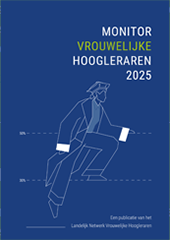
WOMEN PROFESSORS MONITOR 2025
The average percentage of women professors at universities in the Netherlands is 29.9%.
Join LNVH
Women professors and associate professors can join the LNVH.
Newsletter
LNVH’s public newsletter is issued on a monthly basis and contains information relating to the LNVH and general news items.