

‘Science advances better in more diverse groups’
‘Science advances better in more diverse groups’Getting to Know Hannah Dugdale, professor of Evolutionary Medicine at the University of Groningen and as of today, April 20, new LNVH board member
Professor Hannah Dugdale’s research explores why individuals age so differently, why some live longer healthier lives than others. Alongside this work, she advocates for diversity and inclusion in science: collecting and analysing data on gender disparities, publishing findings, and actively working to attract underrepresented researchers to her own group and make sure others do as well. In 2024 she received NWO's Athena Award. She has now joined the LNVH board, bringing with her an international perspective forged across Cambridge, Oxford, Sheffield, Leeds, and Groningen.
What made this the right moment to step into this role and what specifically about the LNVH’s mission felt like a cause worth your time and energy?
Being asked is part of it, of course, but the deeper reason was my recent promotion to full professor. That moment really makes you think about how you want to spend your time going forward, and where you want to devote your energy. I have previously been quite active in promoting equal opportunities, especially within the evolutionary biology community. LNVH resonates with me strongly because the organisation does a genuinely important job in the Netherlands: among other things, it sets and monitors targets, and actively works with universities to make sure those targets are reached.
What got you passionate about diversity and inclusion? Was there a defining moment?
I think I've always been aware of it, but the key moment was a conference in 2011. I was attending with a fellow postdoc and a colleague sat down next to her and said, 'Not another invited male speaker.' That evening, we started looking at the data, and we were shocked to find that only around 15% of invited speakers were women. So, we decided to do something. We analysed the data properly, compared it with baseline levels of women in the field, and published a paper, Fewer invited talks by women in evolutionary biology symposia, about it. That was really where it all began. The statistical comparison to baseline was crucial, previous research often hadn't done that, so we could actually demonstrate that the representation was significantly below what it should be.
The LNVH aims to prevent women from leaving academia earlier in their careers. Where do you think the biggest difference can be made?
Parental leave is a major area. Having previously worked in the UK, I can say that maternity support there is much more generous: you can take up to a full year, and when I took that leave the university provided a postdoc to keep my research group running. In the Netherlands, maternity leave is just three months after the birth, and the parental leave system that follows is difficult to navigate.
I'm actually taking parental leave at the moment and have run into real administrative problems. Our HR software system wasn't set up to handle the combination of paid and unpaid leave in the same month. Parents should be allowed to take this - it helps parents to spread the financial cost of parental leave, plus the university saves money when you take unpaid leave. At first, I was simply told that this wasn't allowed, and it was a lot of work to change this decision.
Beyond leave, promotion criteria also need attention. Some of the assessment frameworks are not yet compliant with DORA (Declaration on Research Assessment, which aims to minimise biases in research evaluation). We can do better there!
You have spent significant parts of your career in both British and Dutch universities. What struck you most about Dutch academic culture when you first arrived?
I first came to the Netherlands in 2009 as a Rubicon fellow and have moved back and forth quite a lot since. I've seen both cultures over a long time. In the UK, due to the Athena Swan Awards (accreditation advancing gender equality, which several major funders require), core office hours for scheduling meetings are 10 am to 4 pm. The culture is very different in NL, I would love to see a culture change here. In terms of hierarchy, my experience in evolutionary biology is of institutions in both countries that have relatively flat structures, which I value. So, I haven't personally found a dramatic difference there, but I know this isn’t always the norm.
LNVH recently started with discussion sessions for academics with an international background to hear their experiences navigating Dutch academia, so we can better inform and refine appointment, selection and onboarding procedures, career progression and language policies. What do you think are the biggest challenges for internationals when it comes to career progression in the Netherlands?
Language requirements create a significant extra workload. I do believe that if you live in the Netherlands you should learn Dutch, but it has to be acknowledged that this is a genuine extra burden, and institutions need to be supportive about it. When meetings shift to Dutch, internationals may not feel safe and welcomed to contribute.
There is also a subtler issue at more senior levels. I have not experienced it directly, but I have heard of people not being asked to take on certain tasks because they are international. And I had a teaching qualification from the UK that I had to fight very hard to get recognised as equivalent to the Dutch BKO/UTQ, even though it was essentially the same qualification. It wasn't until I met someone at a leadership course who had successfully transferred hers at a different university that I was able to push for the same treatment. I believe that the recognition process should be nationally standardised.
In 2024 you won the NWO Athena Award for inspiring female researchers who are role models for others. Who has been the most important mentor in your own career?
There were very few female role models available to me, and that does make things genuinely difficult, because you can't see that it is possible to be an academic as a woman, and, for example, have a family as well. That absence of visible examples has real consequences for younger researchers. So, it has really been my peers - colleagues going through similar experiences at the same time - who have provided the most meaningful support. My co-author on that first diversity paper, Julia Schroeder, is a prime example. We regularly talk through problems: 'Is this surprising? Am I going crazy? How would you handle this?' That kind of honest exchange is crucial, and I think people often underestimate how much value peer support has compared to formal mentoring by someone more senior. Joining an intervision peer-group has also been very helpful.
LNVH has a mentoring programme connecting academics who want guidance. How valuable do you think cross-field mentoring is?
Very valuable. I joined mentoring networks at various stages of my career and found them extremely helpful, even when the mentor came from a completely different field. For issues like work-life balance, an outside perspective is actually an advantage.
You are a Rosalind Franklin Fellow, a program to promote the advancement of talented international researchers at the highest levels of the institution at the University of Groningen. Do you think fellowships and policies like gender quota aimed at underrepresented groups are important?
I think they are vital in the right circumstances. When the percentages of women in senior positions were as low as they were, positions like the Rosalind Franklin fellowship were crucial. There can be a downside - the perception that 'you only got that position because you're a woman.' I haven't experienced that directed at me personally, but I've heard it said about others. It ignores the reality that these fellowships are fiercely competitive, with many excellent candidates applying.
Research shows that science advances better in more diverse groups. If diversity is so low that normal processes aren't shifting it, you have to start the change somewhere. Yes, it may be slow at first and it may change the culture of a place in ways that feel uncomfortable, but the alternative is stasis. And looking at the LNVH monitor, even at the current rate of progress we are probably looking at 2043 before we reach parity at the full professor level. Without fellowships and policy measures, reaching parity would simply take even longer – too long.
You said in your Athena Award acceptance that you intended to use the prize money to push for more diversity. Did you succeed?
I haven’t spent all the money yet, but I have attracted two women researchers to my group. The prize money is covering the research costs for one, and for the other it is being used to fund data collection that she will then analyse. I hope to attract more researchers from underrepresented groups and improve their visibility in academia.
Outside academia, what keeps you grounded?
My children, honestly. My family is in the UK and the distance means they can't simply step in. Managing everything yourself definitely keeps you grounded.
If you could change one concrete thing about Dutch academic culture during your time on the LNVH board, what would it be?
Better support for parents during and after parental leave, especially clarity about what institutions are expected to do. Right now the burden is almost entirely on the new parent to figure it out and push for it, at exactly the moment when they have the least capacity to do so. There should be clear institutional guidelines for managers: if a staff member takes parental leave, these are the steps that need to be put in place. Not 'go sort it out yourself’, you're already overwhelmed. That shift would make an enormous practical difference to the people who need it most.
What do you wish someone had told you at the start of your career that nobody did?
I got a lot of advice telling me not to spread my research across too many diverse topics. But I think you have to push for the things you are genuinely passionate about. That is where your fulfilment comes from, and that is where your most meaningful contributions will come from. My work on women in science has always been a 'sideline' by conventional measures, but it has been one of the most important things I've done.
Your research is fundamentally about why individuals age so differently, why some individuals stay vital longer than others. When you look at women's careers in academia, do you recognise that same question - and do you think institutions are part of the biology, so to speak?
When we talk about ageing, we are looking at the decline in performance in later life. In terms of the gender gap in academic careers, it is not a decline in performance; rather, as the leaky pipeline shows, academic careers are cut short too soon for many talented women. As Sahar Yadegari, director of expertise centre VHTO, nicely said at NWO Insight Out 2026 – it’s not you, it’s the system! We need to fix the system to make academia a welcoming and supportive environment where everyone can thrive.
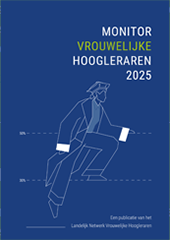
WOMEN PROFESSORS MONITOR 2025
The average percentage of women professors at universities in the Netherlands is 29.9%.
Join LNVH
Women professors and associate professors can join the LNVH.
Newsletter
LNVH’s public newsletter is issued on a monthly basis and contains information relating to the LNVH and general news items.